
Wachuma Grandfather Ceremony Healing Nature Ancestral Medicine and Family Tree Renewal

A Wachuma Grandfather Ceremony is often described as a meeting with ancient memory. Not memory in the narrow sense of personal biography, but memory held in the body, in the land, in the family line, and in the living traditions of the Andes.
Wachuma, also known as San Pedro cactus, has been used for generations in Andean ceremonial contexts. In many lineages, it is treated as a sacred ancestral medicine, not as a recreational substance or a quick spiritual experience. The ceremony is framed through prayer, song, silence, nature, and relationship. Its purpose is often healing, but that healing is not understood as something isolated from community, environment, or ancestry.
This article explores the meaning of Wachuma as Grandfather medicine, its traditional healing role, the place of nature in ceremony, the relevance of ancestral Tahua Inti Suyo codings, and why family tree renewal sits at the heart of this path.
This content is for general information only. Wachuma contains psychoactive compounds, and legal status varies by country. It is not a substitute for medical or mental health care.

Wachuma as Grandfather medicine
In many ceremonial traditions, Wachuma is called Grandfather because it is approached as an elder presence. The word points to patience, teaching, and grounded wisdom. This differs from a purely botanical view of the cactus. Of course, Wachuma is a plant, and its psychoactive effects are connected to mescaline. Yet ceremonial traditions hold a wider understanding.
Grandfather medicine is not only something taken into the body. It is something entered into relationship with.
That relationship may include:
Permission and prayer
Cleansing and preparation
Guidance from experienced ceremonial holders
Time in nature
Songs, offerings, and silence
Integration after the ceremony
The medicine is often associated with the heart. Participants may speak of clearer emotional awareness, compassion, forgiveness, grief release, or a renewed sense of purpose. These accounts belong to lived ceremonial experience rather than guaranteed outcomes. A respectful approach avoids claiming that Wachuma cures specific illnesses. Better language is more truthful: many people seek it for support with emotional pain, life transitions, ancestral wounds, and patterns that feel bigger than the individual self.
The ceremony asks for humility. In this tradition, healing does not come from controlling the experience. It comes from listening.
Sacred ancestral medicine and the body’s intelligence
Wachuma Grandfather Ceremony is often sought by people carrying emotional, spiritual, or physical distress. In traditional contexts, these areas are not sharply separated. A heavy heart may affect the body. Family conflict may disturb sleep. Old fear may show up as tension, fatigue, or disconnection. The ceremony creates a container where these layers can be witnessed together.
People may come to Wachuma with experiences such as:
Grief, heartbreak, or unresolved loss
Anxiety rooted in fear, control, or uncertainty
Depression linked to disconnection or life meaning
Trauma patterns that continue through relationships
Physical tension, chronic stress, or exhaustion
A feeling of being cut off from nature, ancestry, or purpose
A careful ceremonial view does not reduce these conditions to one cause. It also does not promise instant healing. Instead, Wachuma is understood as a medicine that can help reveal where energy, emotion, story, and body are entangled.
For some, this may feel like a release of tears. For others, it may be a quiet realisation about boundaries, family loyalty, shame, or the need to live more honestly. Some people report feeling their body with greater sensitivity, noticing where they hold fear or where they have abandoned themselves.
Physical ailments are also part of traditional healing language, but they need careful framing. In ceremony, physical discomfort may be treated as meaningful, especially when linked to stress, grief, or emotional suppression. Participants may feel warmth, purging, trembling, tiredness, or a sense of energetic movement. These experiences can be intense. They should not be interpreted as medical treatment, and anyone with health conditions, heart concerns, psychiatric history, pregnancy, or medication use should seek qualified medical advice before considering any psychoactive medicine.
The healing promise of Wachuma is not that it removes all suffering. It may help a person meet suffering with clearer eyes, a softer heart, and stronger roots.
Nature is part of the ceremony
Wachuma is often taken in natural settings because the land is understood as an active participant. Mountains, rivers, stones, birds, wind, and trees are not decorative. They are part of the field of healing.
This is one reason the ceremony can feel very different from an indoor therapeutic session. The natural world brings scale. A mountain can help place personal pain inside something older and wider. A river can mirror movement and release. The sun can bring warmth to grief. The earth can offer steadiness when emotions rise.
In Andean worldviews, relationship with the environment is not abstract. The land is alive with presence. Pachamama, often translated as Mother Earth, is honoured as a living source of nourishment, reciprocity, and balance. Ceremony may include offerings to the earth, prayers to the directions, or gratitude for the elements.
This ecological dimension matters. Wachuma teaches connection not only as an idea but as an experience. A person may sense that their healing is tied to how they walk on the earth, how they consume, how they treat water, how they honour food, and how they relate to other beings.
Modern life often separates the inner world from the outer world. Wachuma ceremony brings them back together. Emotional pain is not only private. It may be linked to loneliness, environmental rupture, family silence, cultural dislocation, and loss of ritual. Nature helps restore proportion.
The role of ceremonial guidance
A Wachuma ceremony depends greatly on the integrity of its container. The presence of skilled, ethical guides matters. Traditional holding is not performance. It involves responsibility, humility, cultural grounding, and care before, during, and after the experience.
A strong container may include:
Clear preparation and informed consent
Respect for the medicine and its lineage
Attention to safety, health history, and emotional readiness
A grounded ceremonial structure
Music, prayer, or silence used with intention
Integration support after the ceremony
Because Wachuma can open deep emotional material, guidance should never be casual. Vulnerable states require trustworthy people. Ethical facilitators avoid grand claims, coercion, secrecy around risks, and inflated authority. They respect personal boundaries and do not pressure participants into interpretations.
Ceremony is not only about what happens during the hours of the medicine. The days and weeks after can be just as meaningful. Insights need to become choices. A person may need to repair a relationship, rest more, seek therapy, change habits, or return to simple practices such as walking, journalling, prayer, or time outdoors.
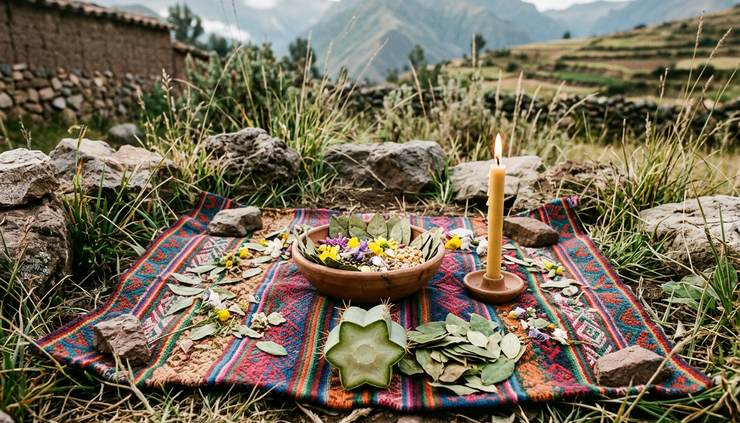
Ancestral Tahua Inti Suyo codings and living memory
The phrase ancestral Tahua Inti Suyo codings points towards a sacred map of inherited wisdom. It evokes the wider Andean memory connected to Tawantinsuyu, the four regions of the Inca world, while also carrying a spiritual meaning centred on solar consciousness, directionality, and ancestral order.
Different lineages may use this language in different ways. In a ceremonial context, codings can be understood as energetic, symbolic, and spiritual patterns passed through ancestral memory. They are not codes in the mechanical sense. They are living instructions held through ritual, song, body, land, and relationship.
These ancestral codings may relate to:
The four directions and their qualities
The sun as a source of clarity, life, and spiritual illumination
The relationship between the human heart and cosmic order
The balance between giving and receiving
The responsibility to walk in reciprocity with the earth
The healing of inherited family and cultural patterns
Tahua Inti Suyo codings may help the participant remember that the self is not isolated. Identity sits within lines of descent, land, language, and spiritual inheritance. Even when a person does not know their full ancestry, ceremony can reveal patterns carried through family behaviour, emotional tone, silence, migration, loss, poverty, violence, devotion, resilience, and love.
These codings are relevant because modern healing often focuses only on the individual. The Andean ceremonial lens widens the field. It asks what has been inherited, what has been forgotten, what needs repair, and what gifts are waiting to return.
Family tree healing in the Wachuma tradition
Family tree healing is one of the most profound aspects of the Wachuma Grandfather Ceremony. Many people arrive believing their pain belongs only to them. During ceremony, they may sense that some burdens began long before their own life.
This does not remove personal responsibility. It gives context. A person may see that their anger echoes a parent’s grief, that their fear reflects generations of instability, or that their difficulty receiving love comes from a family line shaped by survival. These realisations can be painful, but they can also bring compassion.
Family tree healing may involve:
Honouring ancestors without excusing harmful behaviour
Releasing loyalty to repeated suffering
Grieving what was never spoken
Recognising inherited strength as well as inherited pain
Asking forgiveness or offering forgiveness inwardly
Making new choices for future generations
In this tradition, the family tree is not only biological. It can include adoptive family, spiritual lineage, community elders, cultural ancestry, and the land itself. Healing may move backwards and forwards. A participant may feel called to bless those who came before and to live differently for those who come after.
The community container supports this process. When people sit in ceremony together, they may witness one another’s grief, prayer, and renewal. This shared space can reduce shame. Private suffering becomes part of a larger human story. Songs and prayers carried by the group can help one person stay steady when difficult emotions arise.
Community also protects against spiritual isolation. Wachuma is not meant to inflate the ego. It invites belonging. Family tree renewal becomes stronger when supported by real-life acts of repair, such as honest conversation, service, healthier boundaries, and care for children, elders, and the vulnerable.
Healing is a relationship, not an event
The deepest teachings of Wachuma often unfold gradually. A ceremony may open a door, but walking through it takes time. Integration is where insight becomes embodied.
After a ceremony, people may benefit from simple grounding practices:
Spending time in nature without rushing
Drinking water and eating nourishing food
Writing down insights before they fade
Speaking with a trusted guide or therapist
Resting instead of forcing immediate change
Choosing one small action that honours what was shown
The medicine may reveal patterns, but daily life tests the learning. Can the heart stay open in conflict? Can the body be treated with respect? Can the family story be honoured without repeating its wounds? Can nature be approached as kin rather than resource?
These questions are part of the ceremony’s continuation.
Wachuma Grandfather Ceremony Healing Nature Ancestral Medicine and Family Tree Renewal is not only a title. It describes a path where personal healing, ancestral repair, ecological awareness, and community care belong together. The medicine is sacred because it asks for reverence. It is ancestral because it carries memory. It is healing because it can help people return to relationship, with the body, the heart, the family line, and the living earth.
The real takeaway is simple and demanding: approach Wachuma with respect, preparation, and discernment. When held well, it can remind a person that healing is not separate from nature, and the individual is not separate from the ancestors or the community that carries them.

Comments